
Bunk Beds for Kids: The Ultimate Guide to Choosing the Best One

Bunk beds for Kids are a popular choice for children’s bedrooms due to their space-saving design and fun factor. Whether you are furnishing a small room or accommodating multiple children, a bunk bed can be a fantastic solution. In this guide, we’ll explore the different types of bunk beds available, the benefits of using them, safety considerations, and much more.
What Are Bunk Beds?
Bunk beds are multi-level sleeping solutions that feature one bed positioned above another. They can either be stacked vertically or arranged in an L-shape. Bunk beds are typically used in children’s rooms to save space while allowing two or more children to sleep in the same area. Their design often includes features like ladders, storage, or even desks, making them practical for both smaller rooms and shared spaces.
Why Are Bunk Beds Great for Kids?
Bunk beds offer several advantages, especially for families with limited space. They maximize the available room by stacking beds vertically, freeing up more space for other furniture or activities. Moreover, bunk beds can be a fun addition to a child’s room, sparking their imagination. Kids love the excitement of having their own “top bunk” or “bottom bunk,” and it creates a sense of adventure. Additionally, many bunk beds come with built-in storage, helping parents keep toys, books, and clothes organized.
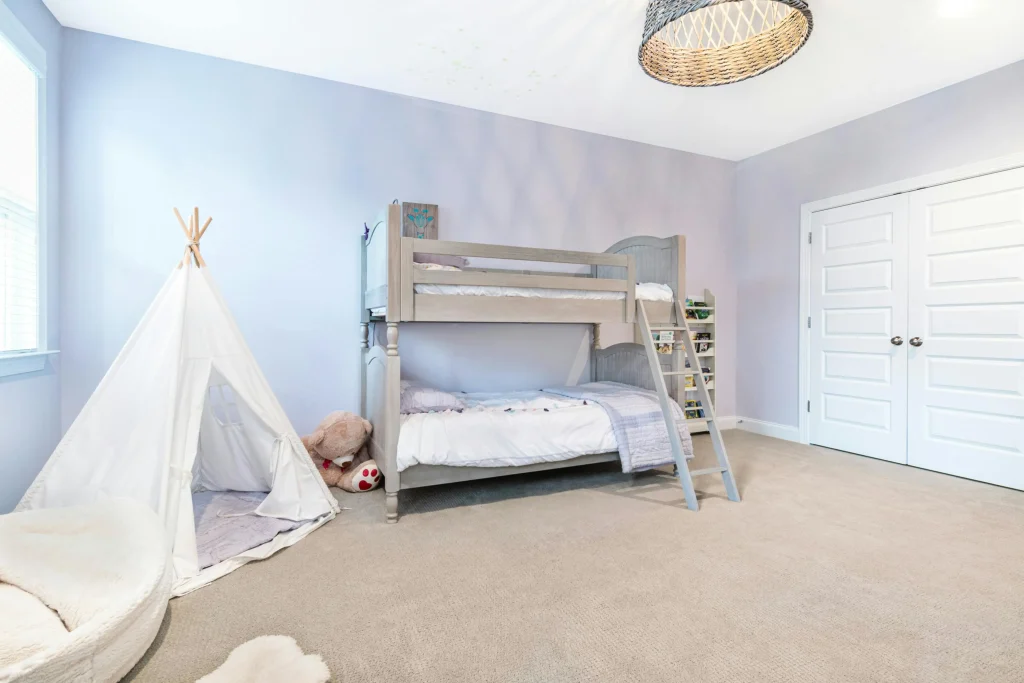
Different Types of Bunk Beds for kids
There is a wide variety of bunk beds available to suit different needs and preferences. The most common types include:
- Standard Bunk Beds: These are the classic design where one bed is placed on top of another. They are ideal for rooms with limited space but can be adjusted with features like built-in storage or desks underneath.
- L-Shaped Bunk Beds: These beds are arranged in an “L” shape, with one bed placed perpendicular to the other. L-shaped bunk beds are perfect for corner rooms or if you want to add a little more floor space while maintaining a fun layout.
- Bunk Beds with Storage: Some bunk beds come with additional features like drawers or shelves, providing extra storage options. This is great for kids’ rooms where storage is often a challenge.
- Bunk Beds with Stairs: While traditional bunk beds use ladders to access the top bunk, some designs incorporate stairs, which are safer and easier for younger children to use.
- Triple Bunk Beds: These beds are designed to accommodate three children, stacked vertically. Triple bunk beds are particularly useful in larger shared rooms or for sleepovers.
- Bunk Beds with Desks: For kids who need a study space in their room, some bunk beds come with a desk or workstation built into the lower part of the frame.
What Age Are Bunk Beds Suitable For?
Bunk beds are generally considered suitable for children aged 6 and older. At this age, kids are usually capable of safely climbing the ladder or stairs to the top bunk. However, safety precautions should be taken into account, particularly with younger children. Always check the manufacturer’s guidelines regarding age recommendations and ensure the top bunk is appropriate for the child’s size and abilities.
How Safe Are Bunk Beds?
Safety is a critical concern when purchasing a bunk bed for kids. Most bunk beds on the market today meet safety standards set by organizations such as the Consumer Product Safety Commission (CPSC). However, there are several safety features you should look for:
- Guardrails: The top bunk should have sturdy guardrails on all sides to prevent children from falling off.
- Ladders and Stairs: The ladder or stairs should be securely attached and designed for easy climbing. Some models even come with anti-slip steps.
- Stability: Ensure the bunk bed frame is stable and made from high-quality materials to support the weight of the children using it.
In addition, avoid placing the bed near windows or ceiling fans to minimize the risk of injury.
Bunk Bed Materials and Durability
Bunk beds are typically made from wood or metal. Both materials have their advantages:
- Wooden Bunk Beds: Wooden bunk beds offer a classic, sturdy design. They often blend well with various decor styles and are ideal for traditional or rustic bedrooms. Wood is also more durable than some metals.
- Metal Bunk Beds: Metal bunk beds are often more modern in appearance and tend to be lighter, making them easier to move. They are also usually more affordable. However, metal can be prone to dents or scratches over time.
When choosing a bunk bed, ensure the material is durable and appropriate for your child’s age and activity level.
What Mattress Is Best for a Bunk Bed?
The right mattress for a bunk bed is essential for both comfort and safety. It’s important to choose a mattress that fits securely within the bed frame, ensuring there are no gaps that could pose a risk of injury. Memory foam mattresses are a popular choice for bunk beds due to their comfort and support. You can also consider innerspring mattresses, but make sure they are not too thick, as they may not fit properly in the bed’s frame. Always check the manufacturer’s recommended mattress size to ensure a good fit.
Bunk Bed Colours and Styling
Bunk beds come in a variety of colours and styles, allowing you to choose a design that complements your child’s room decor. Common colours include natural wood tones, white, black, and bold colours like blue or pink. You can also find themed bunk beds with designs like castles, cars, or tree houses. The style you choose can make a big impact on the overall look of the room, so consider your child’s preferences when selecting the finish and design.
Bunk Bed Delivery and Assembly
When purchasing a bunk bed, consider the delivery and assembly options. Many retailers offer free delivery, but you may need to assemble the bed yourself. Fortunately, most bunk beds come with easy-to-follow instructions. If you’re not comfortable assembling the bed on your own, check if the retailer offers an assembly service for an additional fee.

Conclusion
Bunk beds are a fantastic solution for saving space in your child’s room while also providing a fun and functional sleeping arrangement. With various types, materials, and styles available, you can easily find a bunk bed that fits both your space and your child’s needs. Always prioritize safety and choose a design that will grow with your child, ensuring they get the most out of their bed for years to come. You can also check this. Toys for 1 Year Olds
Frequently Asked Questions (FAQs)
1. Are bunk beds safe for younger children?
Bunk beds are generally safe for children aged 6 and older. For younger children, it’s essential to use proper safety features, such as guardrails and sturdy ladders or stairs.
2. Can adults use bunk beds?
Some bunk beds are designed to support adult weight, but most are intended for children. If you plan to use the bed for an adult, ensure it has a high weight capacity and is made from durable materials.
3. What are the benefits of having a bunk bed?
Bunk beds save space, offer extra storage, and are fun for kids. They also provide a practical solution for shared rooms or sleepovers.
4. Do bunk beds come with mattresses?
Some bunk beds come with mattresses, but many do not. Be sure to check the product details to see if a mattress is included or needs to be purchased separately.
5. Are bunk beds easy to assemble?
Most bunk beds come with assembly instructions, and while they may require some time and effort, they are generally easy to put together with basic tools.
6. What size mattress fits a bunk bed?
Bunk beds typically require standard twin or single mattresses, but you should always check the manufacturer’s size recommendations to ensure the mattress fits properly.
7. Can I add storage to a bunk bed?
Many bunk beds come with built-in storage options such as drawers or shelves. Alternatively, you can choose to add storage solutions like under-bed drawers or baskets.


